What you need to know
Wheel alignment in Edmonton
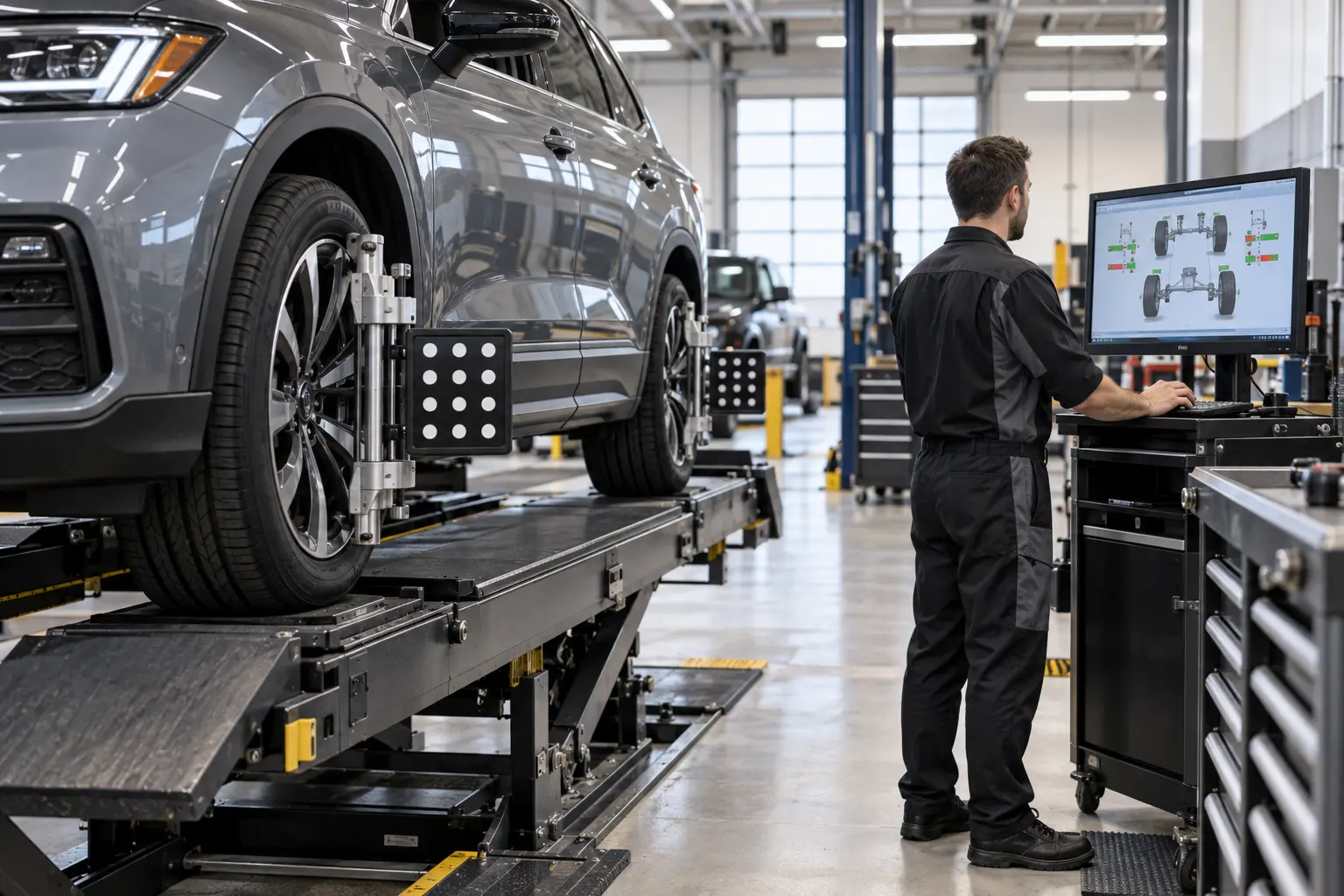
Wheel alignment helps a vehicle track correctly and supports even tire wear. DAS Automotive provides wheel alignment in Edmonton for drivers dealing with a pull, off-centre steering wheel, uneven tire wear, steering vibration, or a change in handling after pothole contact, curb contact, suspension work, or collision damage.
DAS Automotive has served Edmonton drivers since 2012. We start by listening to what the vehicle is doing, reviewing the history that matters, and confirming the right service before work begins. That approach helps customers understand the reason for a recommendation rather than being handed an unexplained parts list. If repairs are needed, DAS provides an estimate and waits for approval before performing additional work.
When to book wheel alignment
Book a wheel-alignment appointment when the vehicle does not drive straight, tires wear unevenly, the steering wheel sits crooked, or a wheel, suspension, or collision event has changed how the vehicle feels. Alignment adjustments work best when related tire and suspension concerns are understood first.
- Vehicle pull: The vehicle drifts or pulls to one side on a level road, requiring you to correct the steering more than usual.
- Off-centre steering wheel: The steering wheel is not centred when the vehicle is driving straight, even if the car seems manageable.
- Uneven tire wear: Tires wear faster on one edge, feather across the tread, or show patterns that suggest alignment, pressure, or suspension concerns.
- Pothole or curb impact: The vehicle hit a pothole, curb, debris, or road hazard and now drives, vibrates, or steers differently.
- After suspension or steering work: A component was replaced or repaired and alignment needs to be checked as part of completing the repair plan.
- Collision-related change: The vehicle has collision damage or a wheel impact and now shows pull, vibration, wheel damage, or handling differences.
- New tires: You want alignment assessed around tire replacement because existing uneven wear can shorten the life of the new set.
- Highway instability: The vehicle wanders, feels less settled at speed, or reacts differently over ruts and uneven Edmonton road surfaces.
A symptom is not always a diagnosis. Two vehicles can make the same noise or show the same warning light for different reasons. DAS uses the symptoms as a starting point, then checks the systems related to the concern. That is why a proper appointment is more useful than replacing a part based only on a guess or an internet search.
How DAS approaches wheel alignment
The process is designed to make the work understandable from the first conversation through completion. The exact steps depend on the vehicle and the concern, but a typical visit includes the following:
- Step 1 — Discuss the driving symptom. DAS asks when the pull, vibration, or steering change appears and whether it followed a pothole, curb impact, repair, tire change, or collision.
- Step 2 — Check tires and related components. The technician reviews tire condition, wheel concerns, and accessible steering or suspension components before adjustments are made.
- Step 3 — Assess alignment readings. The vehicle’s alignment is measured to understand how it compares with the applicable specifications and how the readings relate to the symptoms.
- Step 4 — Explain required repairs first. If a worn or damaged component must be addressed before alignment can be completed properly, DAS explains why and provides a separate estimate.
- Step 5 — Make appropriate adjustments. Once the vehicle is ready, DAS performs the alignment work and reviews the result and any follow-up concerns with the customer.
If the diagnosis reveals another issue, DAS explains why it matters and what additional testing or work would be required. The customer sees the recommendation before deciding whether to proceed. This keeps maintenance, diagnosis, and repair decisions separate and avoids surprising work at the end of the appointment.
What DAS checks before and during alignment
An alignment is more than turning adjustment points. The vehicle must be assessed for the conditions that affect whether the alignment can be completed properly:
- Tire condition and wear: Tread, pressure concerns, visible damage, and uneven wear patterns that affect the result and may reveal a related issue.
- Wheel condition: Visible wheel damage or runout-related concerns that could contribute to vibration or make the vehicle feel different at speed.
- Steering components: Accessible tie rods, joints, mounting points, and related components that can affect vehicle direction and control.
- Suspension components: Struts, shocks, control arms, bushings, ball joints, springs, and other accessible parts connected to ride, handling, and tire wear.
- Alignment measurements: Reading the relevant angles and comparing the vehicle condition and specifications before deciding which adjustments can be made.
- Brake and tire overlap: Noting when braking vibration, tire wear, or wheel concerns should be addressed alongside the alignment plan.
- Collision or frame concerns: Explaining when an impact-related issue should be assessed through collision, frame, or suspension repair before alignment work.
- Road-test discussion: Considering customer-reported pull, vibration, or steering symptoms alongside the inspection and measurement results.
The vehicle is assessed based on the condition that can reasonably be examined during the appointment. Hidden damage, intermittent symptoms, or components requiring disassembly may need more time or a separate diagnostic procedure. DAS is direct about those limits so customers know what has been checked, what has not, and why a follow-up may be recommended.
Plan your appointment
Tell DAS about any impact, suspension repair, tire change, or recent collision before booking. Explain whether the vehicle pulls only under braking, only at highway speed, or on all roads. This helps distinguish an alignment symptom from a brake, tire, wheel, or mechanical issue and lets DAS schedule the right appointment.
When booking, tell DAS the vehicle year, make, model, mileage, any dashboard warnings, and the conditions that bring on the concern. For example, note whether a noise occurs cold or hot, only while braking, on rough roads, at highway speed, while turning, after a collision, or when the A/C is used. Accurate details help match the appointment to the problem and help the service team prepare.
Bring recent repair invoices or a prior estimate if you have them. These records are useful context, but DAS still verifies the condition before recommending work. If a vehicle has a warranty, insurer, seller, fleet, or another party involved, mention that in advance so the scope and communication can be set up properly.
Edmonton driving and wheel alignment
Edmonton potholes, frost heaves, construction zones, curbs, gravel, and winter road conditions can all affect tire and wheel condition or reveal a worn suspension part. Regularly checking alignment when you see uneven wear can help protect tire life and make the vehicle more predictable to drive through the season.
Seasonal temperature changes, winter cold, potholes, gravel, stop-and-go traffic, highway driving, and seasonal tire changes can all affect how vehicle systems behave. A vehicle that feels normal in mild weather may show a different concern when temperatures fall or when road conditions change. DAS helps customers relate the symptom to the vehicle condition, then offers a practical next step rather than a one-size-fits-all answer.
Related services in one Edmonton location
Many vehicle concerns overlap. DAS can coordinate mechanical repair, vehicle diagnostics, brake repair, tire services, wheel alignment, frame and suspension repair, collision repair, and auto body and paint work when the vehicle needs more than one type of care. Each service is discussed and estimated separately so the customer can choose the work that makes sense.
Frequently asked questions
Will an alignment fix every pull?
Not always. Tires, brakes, wheel damage, suspension condition, road crown, and other factors can contribute. DAS checks the related condition before recommending adjustments.
Should I get an alignment with new tires?
It is worth considering if prior tires wore unevenly, the vehicle pulls, the steering wheel is off centre, or the vehicle had a recent impact or suspension repair.
Can a pothole cause alignment issues?
Yes. A pothole can affect a tire, wheel, alignment angle, or suspension component. Tell DAS about the impact and any change in handling.
What if a worn part is found first?
DAS explains the concern and provides a separate estimate. Alignment work is performed when the vehicle is ready for it.
Will balancing solve an off-centre steering wheel?
Balancing and alignment address different concerns. DAS can assess vibration, steering position, and tire condition to recommend the correct service.
How do I know if my tires are wearing unevenly?
Look for heavier wear on the inner or outer edge, feathering, or different tread depth across the tire. DAS can inspect the pattern and recommend the next step.
Book wheel alignment at DAS Automotive
To book wheel alignment in Edmonton, use the online booking page or call 1 416 555 0120. Explain what the vehicle is doing and when you first noticed it. DAS will confirm the right appointment and let you know what information to bring.
If you are unsure whether this is the correct service, start with the symptoms. DAS can help route you to the right mechanical, tire, alignment, collision, body, inspection, or diagnostic appointment.
A practical decision guide for wheel alignment
This page is designed to help a customer address pull, off-centre steering, uneven tire wear, or a handling change by checking the conditions that affect alignment. The most useful repair decision comes from matching what the driver sees or feels with what the vehicle condition actually shows. DAS starts with a vehicle that drifts, a crooked steering wheel, uneven wear, a pothole or curb impact, new tires, suspension repairs, or collision damage, then checks the related systems before recommending a repair plan.
Clear information matters because automotive symptoms often overlap. One vehicle may have a pull from tire wear, while another has a steering, brake, wheel, alignment, suspension, or collision-related issue. DAS separates the observed condition from the proposed repair so customers can understand the reason for the recommendation.
Real-world situations that help DAS assess the vehicle
- Alignment changes can be caused by an impact, wear, tire condition, steering components, suspension condition, or prior repair work.
- A pull that appears only while braking may require a brake, tire, wheel, or suspension assessment instead of alignment alone.
- New tires can wear quickly if an existing alignment or suspension issue is not identified first.
- A bent or damaged wheel can create vibration that feels similar to an alignment concern but needs a different repair plan.
- Suspension or steering repairs may need alignment follow-up to complete the work correctly.
- Road crown can influence how a vehicle feels, so DAS considers the customer’s actual symptoms together with measured vehicle condition.
If a concern is severe—such as poor brake response, difficult steering, unsafe tire damage, overheating, a major leak, a strong fuel or electrical smell, or loss of vehicle control—do not treat it as a normal service delay. Explain the condition before driving to DAS and arrange appropriate help if it is not safe to drive.
Before you approve a repair
DAS provides a clear repair estimate after assessment or diagnosis. Customers can ask what was found, why the work is recommended, what happens if the repair is delayed, and whether any related service should be handled first. That conversation is important because parts, labour, alignment, paint, collision work, diagnostics, and tire work may each have their own role in the final repair plan.
A repair estimate is not a blank authorization. DAS waits for the customer’s approval before starting additional work. If a new condition appears during repair, DAS explains it before expanding the work. This gives the customer control while allowing the vehicle to be repaired in a logical order.
Customer checklist
- Describe whether the pull happens on flat roads, only under braking, at highway speed, or all the time.
- Mention any pothole, curb, collision, tire change, suspension work, or steering repair.
- Bring tire wear concerns to the appointment and ask DAS to explain the pattern.
- Do not assume alignment will solve a damaged tire, wheel, or worn component; allow DAS to assess first.
- Ask which adjustments can be made and what repair must happen before alignment.
Bring the vehicle information, keys, and any relevant history. If another party is involved—such as an insurer, seller, fleet, or warranty provider—tell DAS early. The team can explain vehicle findings and repair options, while coverage, contract, or policy decisions should be confirmed with that other party.
Additional questions customers ask
Will an alignment fix vibration?
Not always. Vibration can come from tires, wheels, balance, brakes, suspension, steering, or other areas. DAS checks the related condition.
Why is my steering wheel crooked?
A crooked wheel may be related to alignment, suspension, steering, tire, or impact history. DAS measures and inspects before recommending the correction.
Can I get an alignment after a pothole hit?
Yes. Tell DAS about the impact and any tire, wheel, pull, or vibration change so related damage can be assessed.
What if alignment numbers cannot be adjusted?
DAS will explain whether a worn or damaged component, collision condition, or vehicle limitation needs to be addressed first.
Does alignment help tire life?
Correct alignment can support even tire wear when tires and related steering and suspension components are in suitable condition.
Keep related work connected
DAS can coordinate diagnostics, mechanical repair, brake repair, tire service, wheel alignment, frame and suspension repair, collision repair, and auto body and paint work when a concern spans more than one system. Each service is discussed and estimated separately so the customer chooses the work that makes sense.